
Red maple (Acer rubrum) is one of those species that I really want to work as bonsai, but have proven quite frustrating. Every one that I have collected with a trunk larger than 2” or so recovers rapidly, puts out a lot of new growth and appears to be doing great, and then rapidly collapses with trunk rot and dieing branches. They do not heal wounds well, even in the wild. Exposed heartwood will rot.
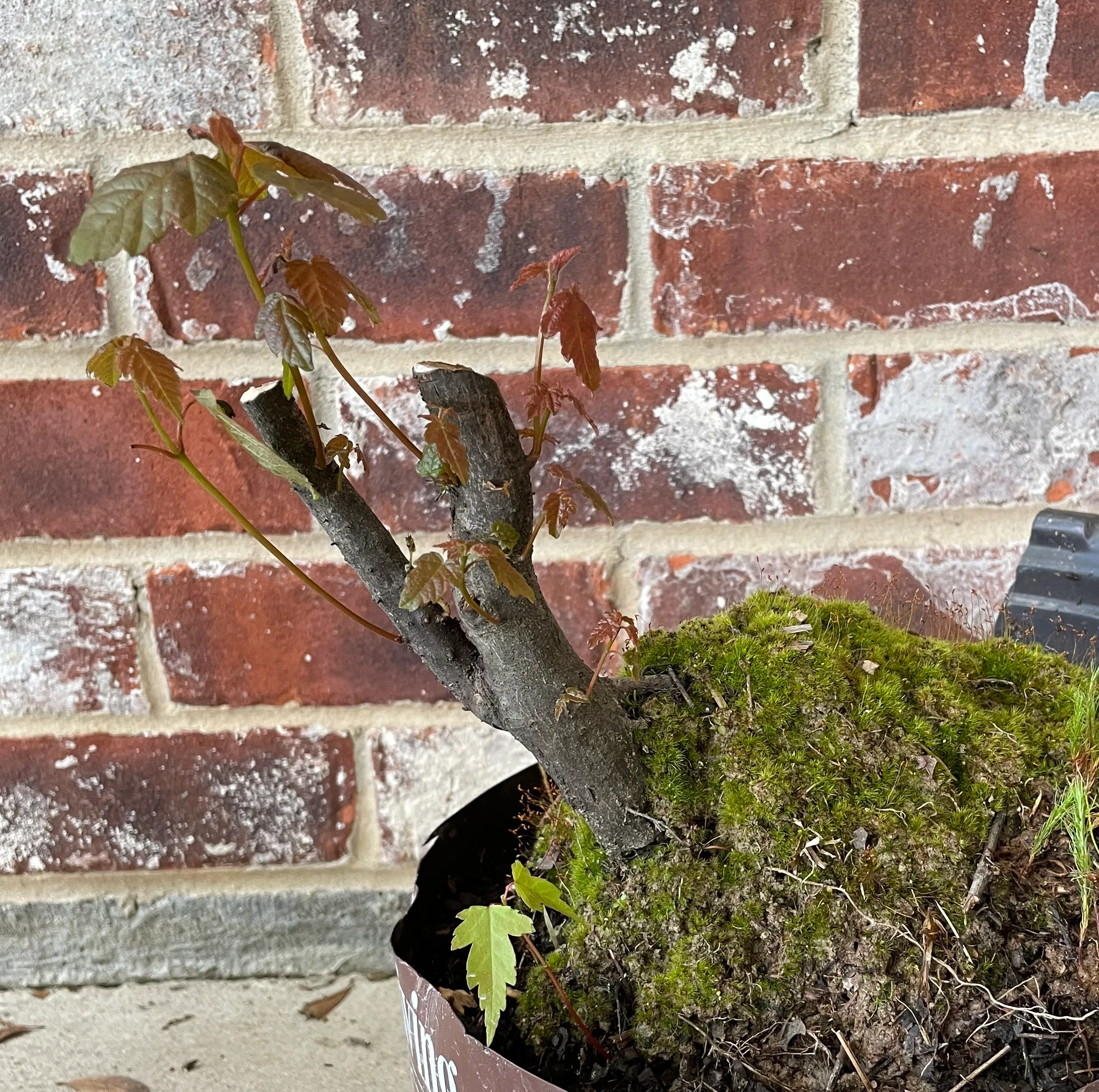
That being said, I have had much more success with smaller ones, despite these issues. I rarely go out into the woods targeting this species, but will pick up smaller ones I come across that otherwise would not survive. This particular tree is an example of that. Our property has a fishing pond on it and the smaller trees are routinely trimmed to make space to fish from the bank. This tree - along with a couple others - was cut in the Winter and I noticed it while fishing in the late Spring (April for us). I quite literally grabbed the trunk and pulled it up off the ground without tools. The entire root ball and clay mound it was growing in came up with it. Shoved it into a leftover nursery pot to see what would happen. Can’t hurt, right? Here is the tree after collection:
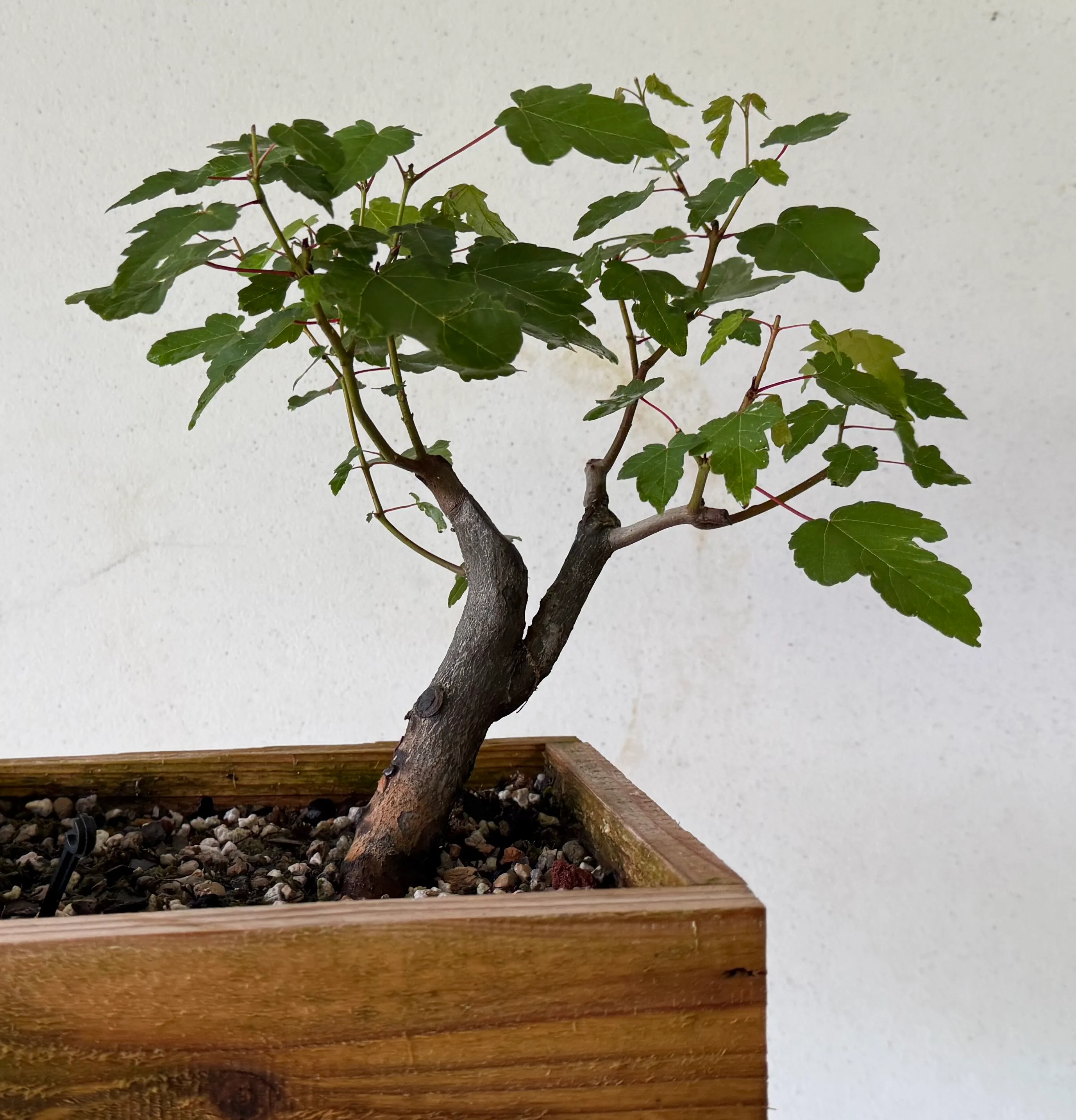
The tree recovered well. For the first year, I just let it grow out and it put on about 3 feet of healthy new growth. The next Spring (February 2025), I bare-rooted it and repotted it in a wood grow box with a soil mix of 1/3 haydite, 1/3 pumice, and 1/3 pine bark. Also gave the tree a trim to start setting the primary branching. The plan was always to keep the tree small. Unfortunately, I did not take pictures in the Spring, but the tree grew strongly throughout the Summer and I used the cut and grow method to encourage short internodes and ramification. Here is a photo from July 2025.
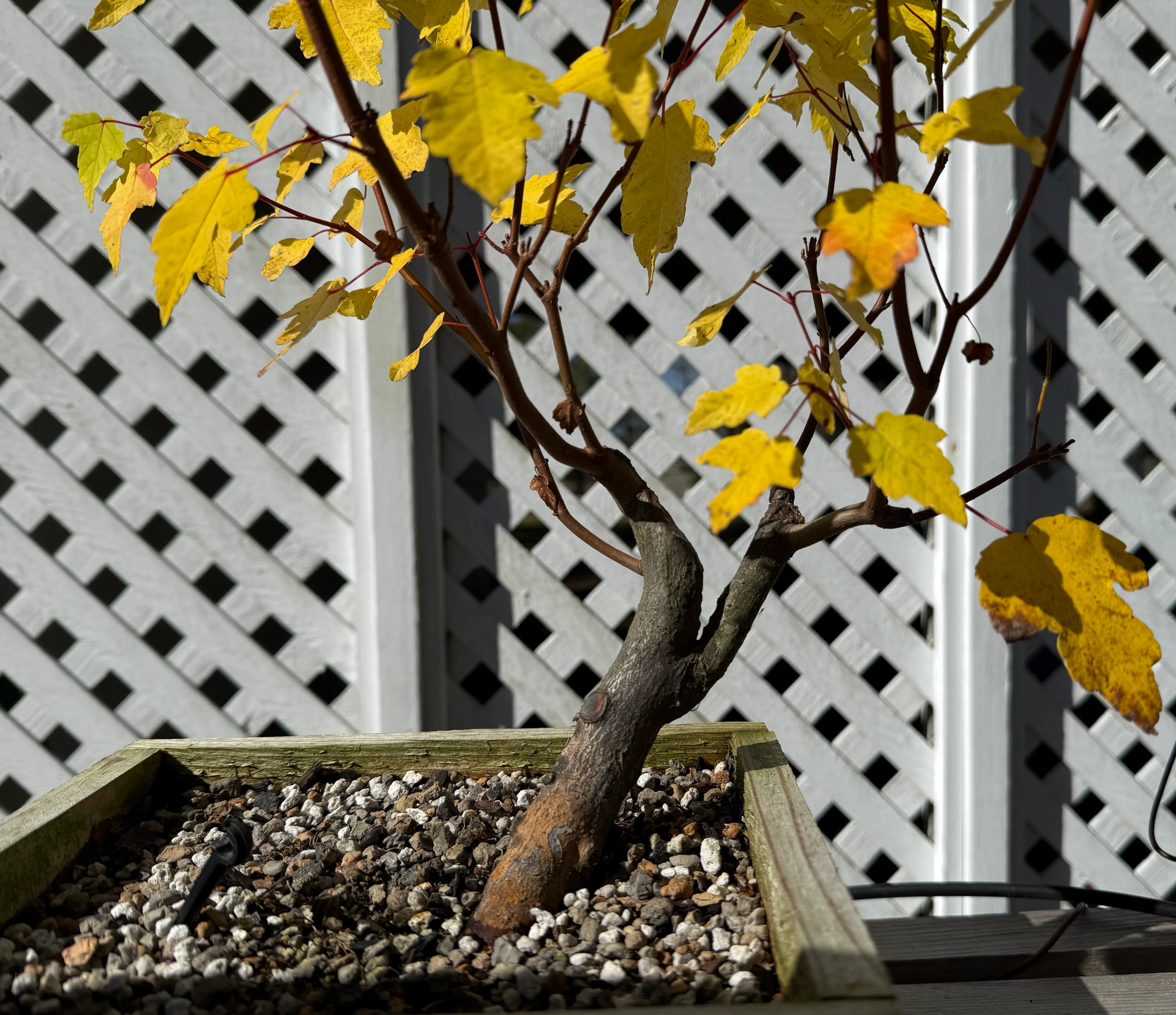
These trees put on a great show in the Fall, even here in Southeast Louisiana. Here is the tree in December, 2025 with bright yellow leaves. Also notice the leaf reduction - if you pinch new growth throughout the growing season, leaves will easily reduce to less than 2 inches. Naturally, red maples have leaves anywhere from 4” to 8” in length.
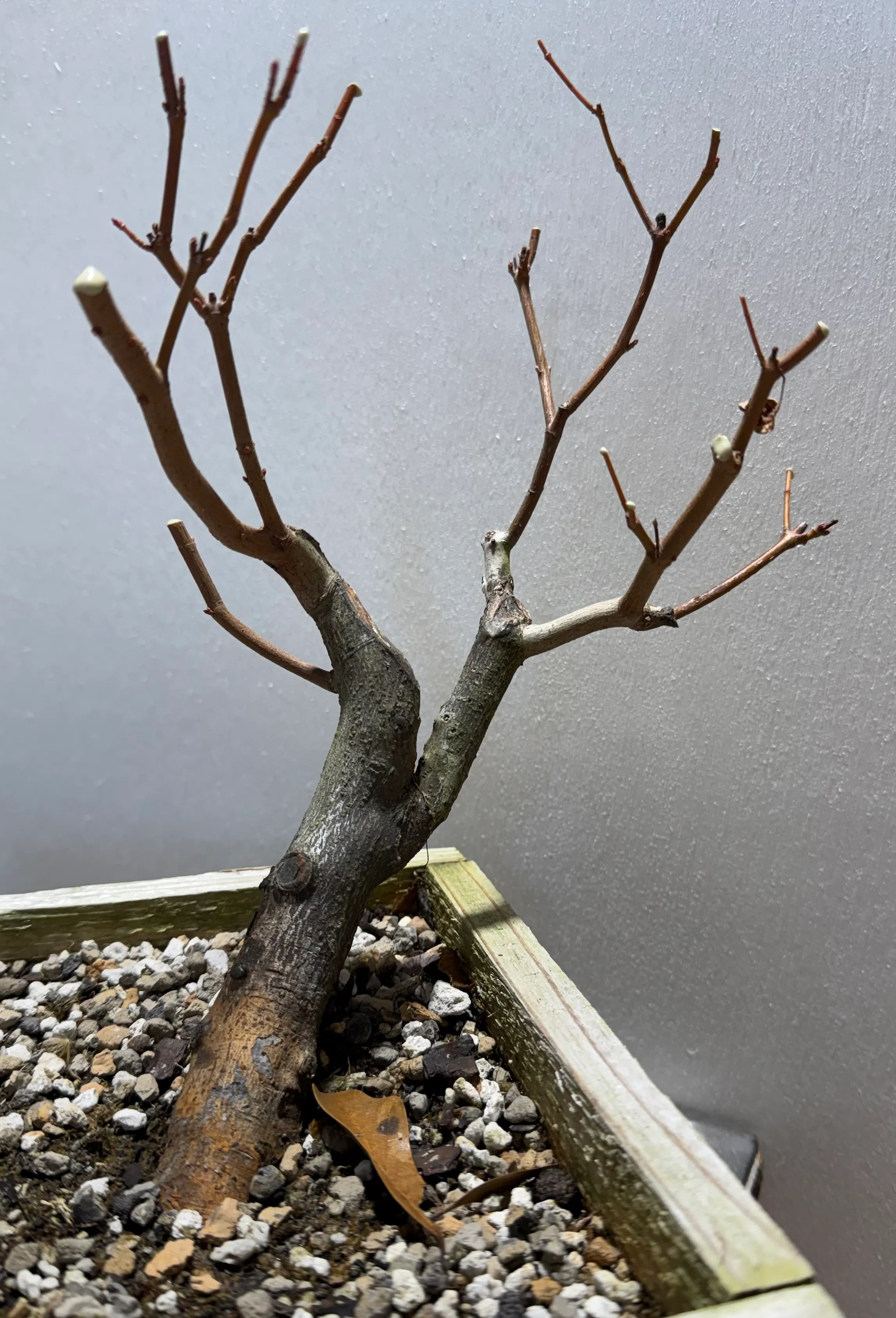
While it was not the most optimal time, I decided to do some pruning on this tree in January 2026. The branches are small and I disinfected and sealed all of the cuts with cut paste. The main objective of this pruning was to prevent thickening of some of the stronger branches, remove long internodes, and select buds for the coming Spring. Here is the result.
They Aren’t That Bad
While I cannot recommend attempting to collect larger red maples, the smaller ones are quite fun to work with. Leaves reduce well, they are vigorous growers, and the Fall display is spectacular. Just don’t expect them to heal larger wounds and watch out for diseases, particularly pseudomonas.
What’s Next
The cut and grow method is working pretty well on this tree, but I may do some light wiring in the Spring to change the position of some of the smaller branches. I may cut a bit further back in the Spring to remove some of those heavier branches, we will see.